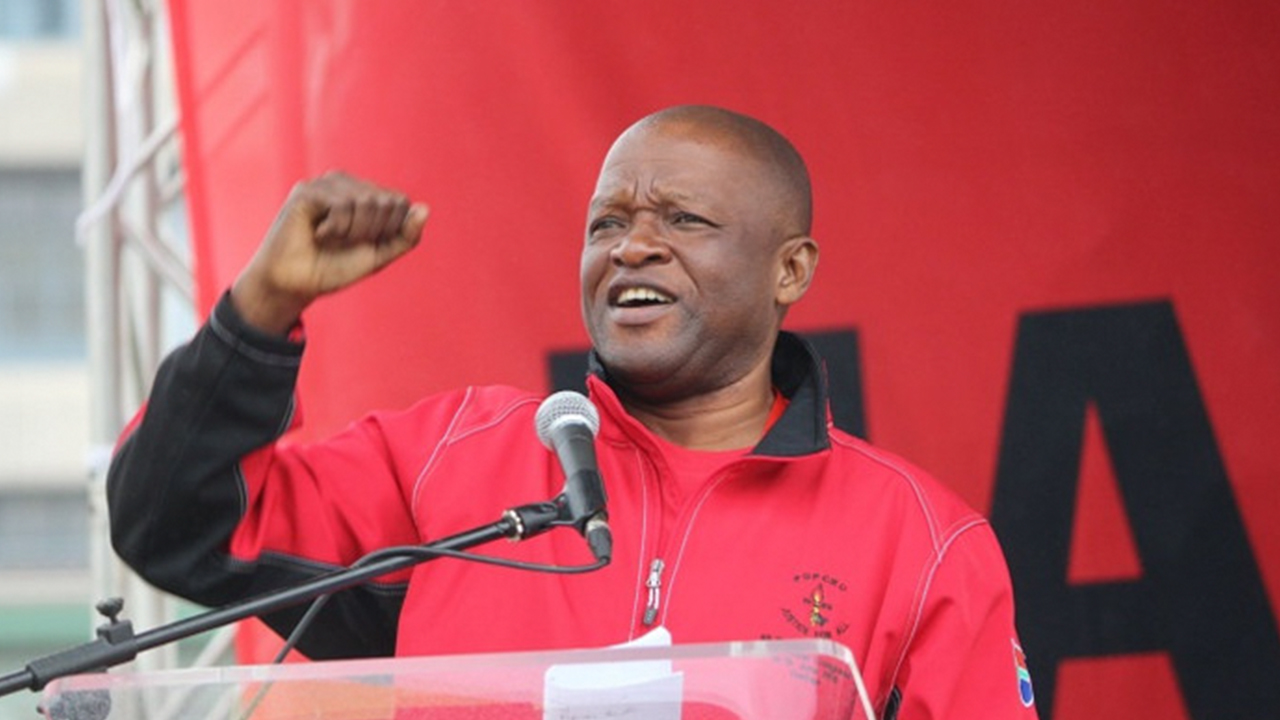
By Zizamele Cebekhulu-Makhaza, President of POPCRU
In 1996, South Africa’s ANC-led government introduced a macroeconomic strategy called Growth, Employment and Redistribution (GEAR), which promised to deliver job creation, better export performance, more investment, greater efficiency and equity of government spending, and enhanced human resource development. GEAR aimed to achieve the lofty goal of macroeconomic balance, reducing inflation and the budget deficit, as well as maintaining consistent monetary policy in order to contain inflation.
This policy was meant to address the structural challenges facing the economy, and particularly unemployment, which is a key factor in the high degree of income inequality and the social fragmentation characterising South Africa. Yet the past 25 years have proven that unemployment is a dragon that the ANC government and this policy remain unable to slay.
Today we have some of the highest unemployment figures ever seen in this country, coupled with rampant poverty. The World Bank Report on Inequality in Southern Africa ranks our country as the most unequal in the world. The cost of living in South Africa continues to rage, placing extreme financial pressure on consumers, and especially the working class. With the unemployment rate now over 32%, it is evident that these neoliberal macroeconomic policies have failed to work and that they have failed the people of this country.
Even while the economy has grown since 1994, it is evident that this growth has been insufficient to turn the tide on unemployment and that government has not created enough jobs. Yet earlier this year, during his 2022 State of the Nation Address, President Cyril Ramaphosa said, “We all know that government does not create jobs – business creates jobs.”
The President simply believes that it is government’s responsibility to create a conducive environment for the private sector to grow and access new markets and hire people. I would argue, however, that this represents an abdication of government’s responsibilities and duties in leading a developing nation, and that it is indeed the current administration’s role to create employment for its citizens – beginning with relinquishing its failed neoliberal policies.
Ramaphosa has blamed rising unemployment on low economic growth, low levels of investment and the unreliable power supply. But instead, the current situation we find ourselves in is directly related to our neoliberal macroeconomic policies. Notably, the recent medium term budget policy statement (MTBPS) revealed that government is still adamant in following its draconian fiscal austerity fiscal measures. No society can be sustained with these harsh austerity measures, which is why we need to adapt our policies.
National Treasury is narrowly obsessed with reaching its target of a primary fiscal surplus over the next financial year. It has further projected 3.3% average annual growth in the compensation of public service employees until the 2025/26 financial year, while government is projecting CPI inflation of above 5% over the medium-term. This underscores the increasing pressure that austerity will be placed on South Africa’s working class and public servants.
The current administration has been aggressively advancing these neoliberal policies and workers are suffering as a result. This cannot continue – government must adapt its policies to strengthen the country’s fiscal position. Macroeconomic policies should ease financial conditions and improve the resilience of consumers. Government needs to increase investment opportunities, drive potential growth, and create jobs. Unilaterally implementing a 3% wage hike for public servants is simply not the answer.
If it’s fast and cheap, it will never be good. If it’s cheap and good, it will never work out quickly. And if it is good and fast, it will never come cheap. But remember: of the three you still have to always choose two.
Think about the content that you want to invest in a created object, and only then will form. The thing is your spirit. A spirit unlike forms hard copy.
I love the feel and sophistication of its superiority. I like people with a keen mind and at the same time easy to talk to.